

The Human in the Helper: I don't blame him

Rose is no stranger to grief. She’s experienced several losses in her lifetime and even specializes in death as a counselor. Helping others navigate loss fuels her professional purpose, and yet she recognizes it’s a whole different experience to go through a significant loss yourself. “My daughter Layla was killed on her skateboard in the crosswalk.” This tragedy catapulted Rose into a shock response. “Everything comes to a halt, until you come out of it or ask for help.”


Rose began her quest for receiving help by reaching out to other therapists. “I knew I needed to process what happened.” She reflected on how others had problematic, and oftentimes hurtful responses to grief. Messages of grief being messy and an urge to get through it as fast as possible. An alarming message of hurry up and get over it. Rose understands grief differently. “Pushing grief down or attempting to get over it leads to it expressing in other ways, most often as flare ups.” She spoke to how buying something at the grocery store can leave a person in tears when they realize their loved one enjoyed that food. Or seeing someone spiral out when hearing food ordered at a restaurant in the exact same way as the person who’s died. 


Rose recognizes that her grief is hers to process in ways that feel right to her. “I couldn’t find a therapist who wanted to help me with this. Several of them said it was too heavy.” So she pivoted into doing her own work individually, and with the help of a close friend willing to be her witness. “Find yourself a friend who can hear it. They don’t need to understand your experience or give advice, they just have to acknowledge they received it.” For Rose, this meant sharing what was coming up for her in text messages to her friend to prevent a flare up. It helped her stay grounded in the most difficult moments after Layla’s death.


Another piece of Rose’s healing process was giving herself a break from her grief. “I told myself that I was going to set it aside to work from 10-2 every day. Then I’d fall apart at 215.” This allowed Rose the opportunity to rest her brain, embrace meaning with her clients, and take a break from the grief of losing Layla. It gave her a sense of power and control in a powerless situation. Rose encourages others to find a counselor who doesn’t take on their symptoms as the client. She explained how it allows the professional to hold space for the work without taking on the emotions associated with the loss. “It’s mine to handle,” she shared, “I’ve got to find hope in the hurt.”


Rose also emphasized how she wants to think of Layla and talk about her every day. “I want to live in the love of her, not the loss. Just because she’s gone, doesn’t mean our love is gone.” Rose embodies this by seeing different perspectives of loss with tons of compassion. “Things happen to everyone involved. I just had to change my glasses to see things from their perspective.” Rose shared how the person who hit Layla in the crosswalk was a peer at school. “I don’t blame him, I could see that it was an accident. Layla wouldn’t have wanted him to stop his life because this happened.” Rose recounts how she took this young man’s hand and walked with him into the crosswalk, so he could truly understand how he couldn’t have seen Layla crossing that day. It’s the gift she gave him in a situation that was awful for so many. “A whole school was affected,” Rose reflected.


Now Rose is even more determined to help others with their grief. She wants clients and community members to feel empowered to take their time and try things until they find what’s right for them. She named that not everyone is going to go through the five stages of grief, and not in any particular order if they do. Rose wants to normalize the grief journey and feels called to  create support since her own journey of seeking support had been so challenging. She’s channeling her experience into her client work, wanting others to feel free of the clutches of grief. “I want to help others find hope in the hurt. Layla’s love fuels everything I do.”

Things happen to us as humans, even as we support our clients as professional helpers. Do you have a story you want to share the mental health community? Email us at croswaitecounselingpllc@gmail.com to learn more about the Human in the Helper Series!
The Human in the Helper: You don’t have to be a rockstar clinician every day

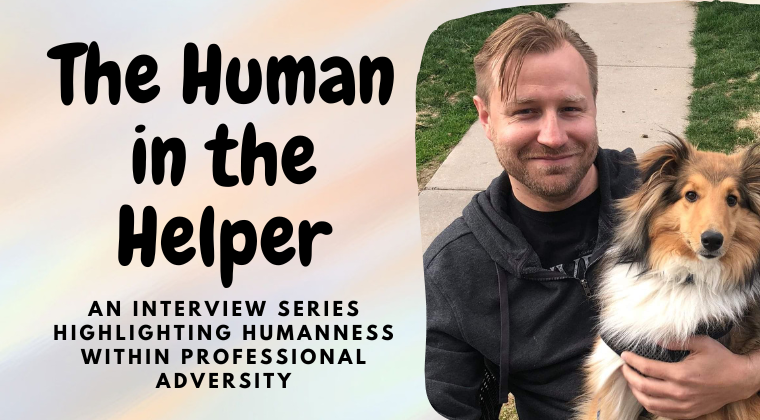
Tim has a calming presence for both his clients in private practice and for his students as a dedicated professor. He’s known for giving students and supervisees grace, affirming that perfectionism isn’t the goal of their learning. Tim says this philosophy comes from his own lived experience with difficult choices, specifically decisions involving his therapy business and his home life in an effort to find balance during moments of grief and loss. “My dad had cancer and was placed on hospice. I was gone from home for three months,” he describes. Thankfully, Tim had already moved his practice to 100% telehealth months earlier when the COVID-19 pandemic had shut everything down, which allowed him to see his clients remotely from another state. “Going to work was a nice break from what was happening with my dad. It was nice to feel in control of something, to remove myself for a break and go to work.”


Although Tim was able to see clients remotely, he made the choice to refer several newer clients to colleagues, knowing he couldn’t give them his best during that difficult time. “I’m grateful for my network, to make this handoff to other specialists that could serve the clients best.” He also worked with several colleagues to take his clients for a month for bereavement after his dad’s passing. “It was really hard. I wish I’d focused on my coping and how difficult it was to see him decline. I wish I had taken off a little sooner.” Tim describes a struggle with wanting to be there for his clients while also taking care of himself. “I don’t think clients got my best at the end. Yet I tell others, including my students, that you don’t have to be a rockstar clinician every day.”


Coping during his loss involved remaining connected to his wife who had stayed at home. “I wanted to call her everyday but not use her to vent every day.” Tim has ideas for fellow therapists who are going through a significant loss. “Use your rolodex. Call a friend and vent. Don’t isolate.” He shared how calling a new friend each night helped him through, without putting too much pressure on his wife as his primary support. “Therapists are used to being the listeners so they don’t always ask for help, which can lead to burnout.”


Tim also talked about the risks of burnout coming from the loss of income when having to reduce a caseload or close business temporarily. “I wish I’d known about business insurance that would pay for when we can’t work.” He named the importance of having some money for emergencies, which echoes some of my work as a Financial Therapist. Most importantly, Tim reflected on the boundaries he needed with clients to avoid burnout. “Clients knew what was going on, but I was very careful to keep the hour focused on them.” He says this is important because he works with a lot of middle-aged clients who have significant responsibilities. When they tried to focus on Tim, he’d reassure and redirect clients by saying, “this is your hour where you don’t have to care for someone else.” 


Tim’s practice is healthy and rewarding today. He and his wife are making plans with the intention of taking time off to travel each year and he continues to teach and supervisee therapists-in-training. When asked what his key takeaway has been from his experience of pausing his business in support of his dad and for grief and loss healing, he said “if you can do this, you can do anything.” His thoughts sound in alignment with post-traumatic growth, which makes sense for folks who experience such a life-changing event like this one.

Things happen to us as humans, even as we support our clients as professional helpers. Do you have a story you want to share the mental health community? Email us at croswaitecounselingpllc@gmail.com to learn more about the Human in the Helper Series!

The Human in the Helper: Sometimes we can’t help switching to professional mode

Thea* is a licensed psychologist who enjoys working with the government. When she’s not engaging military folks and their families, she’s spending time with her husband and children. Although there are several reasons why Thea chooses to work in this setting, one reason is access to care, which stands out in stark contrast to her sibling’s experience. “I was a few months into my new job when my brother attempted suicide,” she shared. Thea had received a call from her dad asking her to do a welfare check on her brother while dad drove over to his apartment. “I live in another state, but because of my job, he asked for my help.”


Thea made the call and shared that the officer arrived to the apartment shortly before her father. “My brother was in bad shape and thankfully got medical care right away because the officer was there.” Thea named that her brother was sent to the ICU and she attempted to go to work the next day. “It was a Friday and I told myself I just needed to get through one day.” Her effort to keep showing up is so relatable to many mental health professionals, who feel like they have to keep going or continue to be strong, even when significant live events happen.


“My boss kindly said go home. I couldn’t keep it together. I couldn’t put a sentence together without crying.” Thea was encouraged to get on a plane and go to her family, which she was able to do later that same day. “My mom and I lived in the ICU for 24 hours.” Interestingly enough, Thea noticed a switch had been flipped inside of her as she connected with her family. “I was trying to show up as a sister, but was being leaned on as a professional.”


Thea helped gather supplies for her brother’s transition to inpatient after he stabilized. She was surprised with how quickly she was able to move from tears to her professional role when helping her family navigate these next steps. Once her brother regained consciousness, Thea returned to her own little family, taking a day to regroup. “I needed a day to recenter, which I spent with my family.”


When asked how her brother’s suicide attempt has impacted her, Thea reflected on how she’s more comfortable holding space for loved ones who are worried about a family member with suicidal thoughts. “I’m very intentional about exploring their options and often hear how they are worried about upsetting their loved one if they take action. I self-disclose, saying I still have my brother because of taking action.” Thea provides resources and holds a lot of compassion for loved ones under this kind of stress. Unfortunately, the system has failed her brother in some ways. “After his inpatient stay, he wasn’t able to continue the medications they prescribed or see an outpatient provider because he had lost his job and didn’t have health insurance.”


Thea named that her brother is doing better, but is still struggling to access resources due to challenges with employment. She checks in more often, and offers her support to him even though they continue to live in different states. Thea also recognizes how her brother’s experience reinforces her gratitude in working within a system that provides access to care when people need it. She encourages colleagues to take suicidal thought seriously in their work, and to remain curious about the impact on the person with suicidal thoughts as well as their loved ones. “I still have a brother, and I would do [a welfare check] again in a heartbeat.” Thea recognizes we are both humans and professionals in mental health, and encourages clinicians to be gentle with themselves in emergencies like these. “Give yourself time and take care of yourself.”

*The interviewed professional’s name has been changed to protect confidentiality.

Things happen to us as humans, even as we support our clients as professional helpers. Do you have a story you want to share the mental health community? Email us at croswaitecounselingpllc@gmail.com to learn more about the Human in the Helper Series!

5 Tips for a Successful Children's Book

As a writer and published author of soon-to-be eight books, I recently embarked on the journey of a children’s book and received questions from my community about the process. Have you always wanted to write a children’s book? Are you curious about the steps? Let’s look at five tips for a successful children’s book under the self-publishing model!

  1. Know the Market

For most people, your journey starts when you get an idea of a topic or plot you want to capture for your audience of kids. What books are already out there with a similar plot or topic focus? If there aren’t many, you have a brighter green light to go forward with your book. In contrast, if there are popular books already out there on the topic, or your plot is too similar to a best-seller, you could put yourself at risk of trademark or copyright infringement, so make sure your topic or spin on a topic is truly unique!

2. Confirm Your Audience

Now that you’ve confirmed your topic has value, who is your audience? Is it a certain age of children? Elementary aged kids? Parents with kids with a particular challenge, like kids going through divorce, kids starting at a new school, kids struggling with ADHD? In my process, I reached out to four child therapists in my community that I respected to see if they’d read my text for feedback. I asked them what age they felt it was written for when working with kids—a population I haven’t served in 7+ years—which helped me narrow down my age range for illustrations of the characters and future marketing.

3. Invest in Illustrations

A children’s book has to have eye-catching illustrations and cover design for people to want to pick it up. Therefore the most significant investment (both in time and money) is illustrations. If you are a creative person, you could attempt to complete the illustrations yourself. For many of us, however, the illustrations come to life through contracting another professional who specializes in children’s book illustration. I put out a request for proposal for an illustrator on upwork.com and had over 35 responses in 36 hours. The next step is taking a look at their portfolios to see what designs speak to you, and confirming price point and pages.

Tips:

  1. Amazon KDP self-publishing requires a minimum of 24 pages to publish

  2. Color illustrations cost more than traditional books to print

  3. Set your budget for the project versus an hourly rate to manage costs. Plan for a range of $1000-$3000 USD depending on the contractor you hire, how many characters you want created, and how many pages your book includes.

4. Embrace Creativity and Communication

Once you hire an illustrator, your job isn’t done. Now comes the part about communicating your vision so they can bring your story to life! What aspects or details do you want included in your characters? Can you “paint the scene” in words for your illustrator to draft-up each page as part of your story line? I enjoyed this process the most because it challenged me to communicate what I was seeing in my head into details my illustrator could work with. Don’t be afraid to speak up about changes in the sketching phase to get things “just right.” After the illustrator gets your go-ahead, they add color for the final design.

5. Identify your Keywords

In the self-publishing space, keywords matter. Thousands of books are being released each day, so ensuring that your audience can find your book amidst millions of books is critical. I enjoy working with Richard Wolf at Wolf Design and Publishing. He’s fast, affordable, and shows his process of finding the keywords that will best help folks find your book when he delivers the results for you to put into your Amazon listing prior to publishing.

Your dream of writing a children’s book can be a reality! Embrace these five tips to get your children’s book out of your head and onto paper! I look forward to learning more about your process and celebrating the launch of your future book with you!

The Human in the Helper: I found out on Facebook

Cathy has a disarming, warm personality that shows up well on video and in person. When she’s not writing her next book or offering workshops, she’s enjoying her dogs or recording new content for her online classes. Cathy isn’t afraid to talk about things that feel heavy, like being scammed or death and dying. It’s one of the many things that makes her the ideal person to talk to therapists about professional wills. She also has the lived experience of losing two colleagues suddenly. “Grant and I worked together on projects and I asked him to be the executor of my professional will,” Cathy shared. Grant said yes, and asked Cathy to be his executor as well. But then Grant didn’t get around to writing a will before he died suddenly. “Amidst my grief, I had to find a way to get his files.” Cathy went on to describe how she learned of his sudden death. “I found out on Facebook. It was sad and difficult.”


Cathy shares how she had to compartmentalize her grief in order to take care of things for Grant. “I had to figure out how to reach his family. I had to find his calendar to notify his clients.” Cathy describes a frantic search for Grant’s files, which were in three different places. She worried about clients showing up to sessions and wondering where he was. She worried that clients would find out about his death through social media too, adding a traumatic layer to their loss. “Every phone call was hard,” Cathy named. She held space for Grant’s clients in their grief and helped them connect with new providers, which felt like a process for both her and them.


That wasn’t the end of Cathy’s grief. Two years later, a second colleague died suddenly. It was another tragic example of someone who didn’t have a professional will in place. Although Cathy wasn’t the executor for this colleague, she had some realizations from her experiences of loss. “I knew my professional will wasn’t going to cut it.” She also realized that more colleagues needed to understand the importance of a professional will, for themselves, their clients, and their families. “I needed to take some action,” Cathy shared.


Cathy began gathering materials for a more in-depth professional will template, in honor of her experiences with Grant and her second colleague who had died. She started offering workshops to help therapists craft their professional will, and noticed how her experiences with colleague loss had changed her profoundly. “I noticed that I didn’t shy away from saying death or dying.” C


Cathy saw firsthand how crafting a professional will triggered her colleagues. It caused a fear of death to surface, and it asked people to look at their own mortality. “It showed up in every single workshop,” Cathy named. She describes how some colleagues needed to take a break, while others wanted to pause and come back to writing their will at a later time. Cathy recognizes this is a difficult but necessary process for many.


“Just get something written down,” she says. “Anything helps. Talk to a colleague, or tell someone where you keep your key.” Cathy shares how the more someone can plan and get into the details, the more it helps others. She also suggests exploring the wording of what you want your executor to say about your death. Are details important? Is there wording that feels least harmful to the clients left behind? Professional wills represent more than just details of where to find your files or client information. “It’s something to guide a colleague,” Cathy says, “it shows care for your clients, it shows care for the person doing this process for you, and it shows care for your family members who are in grief.”


You don’t have to do this by yourself. Access Cathy’s online course for writing your professional will HERE.

Things happen to us as humans, even as we support our clients as professional helpers. Do you have a story you want to share the mental health community? Email us at croswaitecounselingpllc@gmail.com to learn more about the Human in the Helper Series!

The Human in the Helper: My clients didn't know

Sharon loves using humor in her therapeutic work, which serves her well considering she works with a variety of clients including children to older adults. It’s also helped her navigate almost four years of medical challenges. “I had three medical issues in a row!” Sharon shared. She reflected on needing serious medical care that felt disruptive to her work-life balance for several years. “It was hard. Sometimes it was great to be with clients because I needed to think of things other than the pain.”


Even as Sharon was attempting to navigate her pain, most of her clients didn’t know she was going through so much. “Clients would be shocked to know what I went through. They had no idea. I had to think about if it would hurt or help clients to know,” she said. This was possible due to her offering telehealth sessions where clients couldn’t see the medical changes or recovery equipment in her life at that time. Sharon went on to describe how she didn’t want to reinforce attachment traumas for certain clients or cause them to worry about her, resulting in clients attempting to caregive her rather than focusing on their own stuff in therapy. “We have to be curious about if honesty is helpful, or if it just makes it about us, “ Sharon warns.  It helps us reflect on the purpose of self-disclosure when things are happening in our personal lives, exploring the impact on our client work from multiple viewpoints.


Sharon isn’t saying that clients come first, however. When it comes to medical care and health and wellness needs, she recommends therapists treat themselves likes CEOs. “Be the CEO of your business where your needs come first, then your client care.” She named how making her health a priority actually helped her get better, and allowed her to serve her clients better when feeling well again.


An important part of Sharon’s recovery in needing medical care was her own support system. She reflects on how embracing vulnerability and sharing her struggles with colleagues helped her reduce her caseload with thoughtful referrals when she was feeling tapped out. She named gratitude for a spouse who encouraged her to do what needed to be done in order to get better.  “There’s a strength in saying there’s no way I can get through this on my own.”


Sharon is celebrating that she’s in a better spot with her health today, and recognizes that the lived experience of multiple medical concerns has made her a better clinician in some ways. “Having to sit in the question of ‘is this it?’ myself allows me to sit in this heaviness with clients.” Whether it’s aging, end of life, or the loss of a loved one, she feels prepared to slow down with clients and feel the big emotions that come with mortality and loss. She continues to hold passion for her client work and gratitude for her experiences, and names a willingness to keep her health a first priority amidst her calling as a clinician. “As long as I can take a break from any surgeries or medical crises in 2024,” Sharon grinned.

Things happen to us as humans, even as we support our clients as professional helpers. Do you have a story you want to share the mental health community? Email us at croswaitecounselingpllc@gmail.com to learn more about the Human in the Helper Series!
The Human in the Helper: I was going to be resentful and hateful of the field

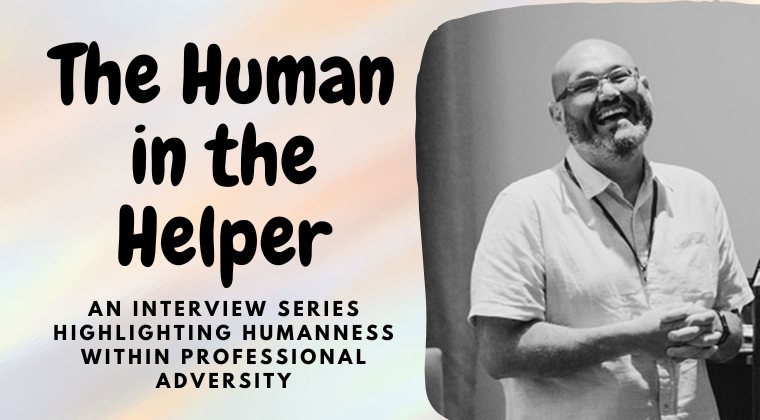
Alex loves traveling, his husband, and his fur babies. He’s known within his community as a committed mental health leader, dedicated group practice owner, and compelling TEDx speaker. Most importantly, he embodies a genuineness and passionate energy you don’t often see when working within hardened systems that focus on significant trauma and addiction. Seeing how much he’s accomplished in the past few years, it may surprise you to know he was starting to lose his passion and soulful work to the burden of busyness. “It was consuming me,” Alex shared.


Alex describes an imbalance where work was the top priority. He was fielding calls, putting out metaphorical fires, and always having to check his phone for issues, even while on vacation. “I didn’t look forward to coming home [from vacation]. I was stressed at the thought of coming home.” Alex knew something had to shift, but he felt he was committed to his group practice’s growth and goals for the next few years. His spouse described the agency as Alex’s baby, taking his full attention and energy since it was still in an infancy stage of growth.


“That hurt to hear him say,” Alex said, “but it didn’t cause a pivot.” At least, not yet. Alex had been considering a career adjustment for almost two years before he hit his limit. “I was in Oregon on a ropes course and had dislocated my shoulder,” Alex remembers. He recalled how he noticed he was attempting to talk himself into pushing through and finishing, all while in immense pain. “I asked myself, who do I need to prove myself to? Tapping out is okay.” Then Alex felt a flood of emotions as he realized this urge to keep going and pushing through was part of his experience as a group practice owner. He had finally come to a decision, it was time.


Although his community saw the end result as an announcement to close his agency, Alex disclosed several factors that influenced this pivot away from group practice ownership. “I want my husband to be my top priority. I want to do soulful work again. If I didn’t pivot, I was going to be resentful and hateful of the field.” Alex reflected on how his five domains of self—something he presents on often within his community—were suffering under the experience of too much busyness. “Now I’m paying attention to what feels in alignment with my values.”


Alex shared that although he’s grieving the change, it’s a joyful process to see the meaningful differences in his day to day life. “I get to work and do something I love and spend time with my husband.” Alex doesn’t want to live with regrets, especially as he helps his spouse navigate a recent decline in health. “I’m not going to compromise who I am as myself or for my husband for the profession.” In other words, Alex is embracing a shift towards prioritizing relationships and health over work.


A pivot in practice ownership is something Alex wants to normalize for his colleagues. “You don’t owe anyone any explanations. You don’t owe it to anyone but yourself.” Alex went on to describe that pivoting is a normal experience as priorities in life change. How do you know if you need to pivot? Alex has a suggestion. “Imagine you are on your death bed. Will you be happy with how things are now? Or will you have regrets? You can pivot!” Alex doesn’t want to feel like he has ignore warning bells when things are out of alignment, and he doesn’t want other clinicians to respond this way either. “Notice what you are saying to yourself. To tap out is okay.” In support of balance, Alex plans to continue to speak and consult on burnout and soulful work with other helping professionals. It’s a way he can give back to the profession without burning out, which is something he hopes to inspire in colleagues on their own path of self-discovery as well.

Things happen to us as humans, even as we support our clients as professional helpers. Do you have a story you want to share the mental health community? Email us at croswaitecounselingpllc@gmail.com to learn more about the Human in the Helper Series!

Seven Steps to Changing Your Business Name as a Therapist

It can feel like a stressful process to change your business name, much like it can feel overwhelming to change your last name. What steps do you need to take? What order should you take them? What are you forgetting? Since I’ve experienced both a business name change and last name change, I wanted to share some steps to make the business name change that much easier for everyone else to navigate as private practice therapists and small business owners.


Step 1: File a request to change your business name with the IRS. You will get an updated EIN letter reflecting the same EIN and new business name, which will be used to submit changes to other organizations electronically.


Step 2: Change your business name with your business filing in your state. Here in Colorado, it’s the Secretary of State where you can login and request an update, found in the same portal as your annual business filing requests.


Step 3: Complete forms and/or notify insurance panels of the name change. This could take weeks to months to update, which if they are writing you checks, could become a problem if not tackled just so. Don’t forget to update your CAQH profile at the same time since insurances will cross check that!


Step 4: Update your EHR to reflect the name change in your consent forms, your disclosure, your scheduling tool, and your practice information. Notify your clients of the name change in writing so they don’t get confused.


Step 5: Update your bank information to reflect the new business name. Oftentimes this requires an in-person meeting with a banker at your bank to provide the documentation required to make the change. When you schedule your appointment, confirm what you need to bring to make the meeting as efficient and painless as possible.


Step 6: Notify your professionals of the name change, including your biller (if you have one), your accountant, your financial advisor, your tax person, your practice lawyer etc. Notify your malpractice insurance so they can re-issue your insurance for the updated practice name.


Step 7: Update your marketing materials. This includes:

-Your website

-Your logo

-Your social media accounts

-Your Facebook business page


Now you are ready to announce the change to your community! Even though there is excitement in the change, it can also feel daunting, especially knowing that not all of these steps will go smoothly. Give yourself some grace and a significant runway to implement all the changes before announcing it officially. It can feel like a long process to get everyone up to speed on the new name, however once it’s done, the excitement of pivoting will return, allowing you to look forward to the next meaningful chapter in your business!

The Human in the Helper: My lips were purple

Liliana loves to take her morning walks. She’s usually accompanied by her fluffy white dog, a loving companion as they take in the vast beauty Colorado has to offer on various trails. Yet the serenity and meditative quality of her walks was disrupted five months ago. “I got off the plane and was dizzy. I thought that they didn’t decompress the plane properly.“ Liliana described ignoring her body’s messages as she attempted to resume life at home after traveling. She felt tired but didn’t think anything of it, laying down after her meetings one day to take a nap. “My son took me to the hospital because my lips were purple and I was struggling to breathe in my sleep.”


Liliana collapsed in the Emergency Room, and was rushed into treatment and emergency surgery for a pulmonary embolism. “I can’t take this life for granted, I don’t know what could happen next.” That was three months ago. Liliana has since learned that her medical crisis didn’t have a clear cause, which adds to the frustration she feels for herself and her family. “I have to take things one day at a time. Some days I need to rest or I need oxygen. Other days I feel good.”


Although this event holds medical trauma Liliana is still working through, it isn’t her first medical crisis where she’s had to rework how she operates. Liliana was diagnosed with thyroid cancer while pregnant with her son. “I had been conditioned to push through, to go-go-go.” Now she says she’s changing up how she works for herself in private practice. “Everything goes around medical appointments or how I feel that day.”


When asked how she’s coping with this significant life change, Liliana shared she’s embraced her love of writing. “I write poetry. I take time to write. I had to write. It helps me tune into my body.” Liliana described a recent experience with a spa service where her body said no. “I told the technician that it was a no-go, and started to cry as soon as I was outside. I didn’t know why.” So Liliana went home to write. Her body remembered something and was attempting to protect her, even though her mind couldn’t remember. “I’d passed out, I couldn’t remember all that happened in the ER that day.”  Her doctors later filled her in, stating she’d had a near fatal experience.


Although medical trauma can be heavy, Liliana wants colleagues to know that they can adapt. “Have a plan and be prepared to pivot as well.” She’s doing this herself when scheduling speaking engagements, consultations, clients, or new supervisees. “I’m up front about having a medical condition that looks like a disability. I let them know there’s a possibility of a pivot if my body says no.” Liliana says her community has been understanding and flexible. She offers referrals to anyone who needs more consistency than she can offer right now at this time in her life.


“I’m embracing my humor,” she shared. “I’m taking in all these things I didn’t think I’d notice.” Liliana is describing her increased mindfulness and gratitude practice after her medical crisis. She named being able to walk, to work, to do what she loves as gifts in her life. She also identified an aspect of surrender into the unknown. Pivots and changes to her schedule can feel like a daily occurrence. Liliana is approaching life with immense gratitude and intentionality. We know others can do it too. Whether it’s found within client work or through daily walks in nature, anyone can adopt this mindfulness practice in support of their health and well-being. 

Liliana’s latest poetry, shared with permission.

 It’s hard…body.  by Liliana Baylon

It’s hard to listen to you, body. 

I was conditioned to ignore you. 

To not trust you. 

To rely on others to diagnose you. 

Yet, you keep insisting. 

And I keep pushing through. 

Have patience with me! 

Is hard work, what you are asking of me! 

I’m getting to know you, 

To learn from you, 

To lean on you, 

To be curious about you, 

To recognize what you are asking of me, 

To understand what you are feeling, 

To answer your call. 

Keep talking to me. Keep insisting, please! 

Teach me what I need to learn. 

Keep being patient with me. 

I’m learning from you. 

Things happen to us as humans, even as we support our clients as professional helpers. Do you have a story you want to share with the mental health community? Email us at croswaitecounselingpllc@gmail.com to learn more about The Human in the Helper Series!

Five Favorite Books in this Family for 2023

As a new mom, I love gushing about how much our daughter loves books. At 18 months, she willingly sits through a dozen books at a time, and enjoys turning the pages or pointing out details. As you can imagine, this means we go through lots of books multiple times in a week. Here are the top five favorites she’s enjoying in 2023, that also have my stamp of approval as a mom and mental health therapist!


When a Donut Goes to Therapy. How could I not like a cute little book about a donut who goes to therapy when I’m a therapist? With rhyming and adorable illustrations, it captures the nerves of seeing a therapist for the first time, the therapeutic work, and the graduation when therapy is done, which is also an important part of the process. Bonus points for terms and resource written for both youth and parents at the end!


Reverie, I Believe in Me. Gifted to my daughter by a family member, it does double duty of having cute unicorn illustrations and supporting entrepreneurship in women and girls. As a serial entrepreneur myself, I enjoy the messages of 1) try things that bring you joy, and 2) believe in yourself. Putting in the work can have positive results, which rings true for a lot of entrepreneurs starting new projects or innovations. Did I mention it has a female entrepreneurial unicorn? Sold!


Zen Pig: The Art of Gratitude. A cute little free book we got in a bundle, it was published in 2021. The watercolor illustrations are peaceful and the messages of mindfulness and gratitude are conveyed through the rhyming and pacing of the book. My daughter and I are happy to read it over and over because of it’s simplicity and heartfelt message, which comes through clearly without getting lost in being wordy or lengthy.


Made for Me. Selected for Father’s Day, there are several things to love about this book. First, it depicts a larger bodied parent in support of body positivity. Second, it shows a dad as the active and primary parent, possibly a solo parent! Third, the child in the story is gender neutral, which feels intentional and is appreciated by me as a reader. Shout out to the author being a dad of several children, the rhymes and loving illustrations made this book a quick favorite in our household.


How I Met My Monster. I can’t recall who gave us this book, but our daughter gravitated to it once she could turn pages on her own. The clever spin on each kid finding their best fit monster to help them stay in bed and sleep also takes some of the scariness away for kids who might have fears of monsters under their bed at night. As part of a series, I’m looking forward to checking out the other three books. The vibrant colors and fun characters make it a delightful read, with my spouse enjoying this book as much as our daughter thanks to the silly voices I deploy as we read it aloud!


What should we read next? I welcome your recommendations as we continue to devour tons of books with our little, avid reader!